
SCIENCE ILLUSTRATION
Engaging visuals for complex science
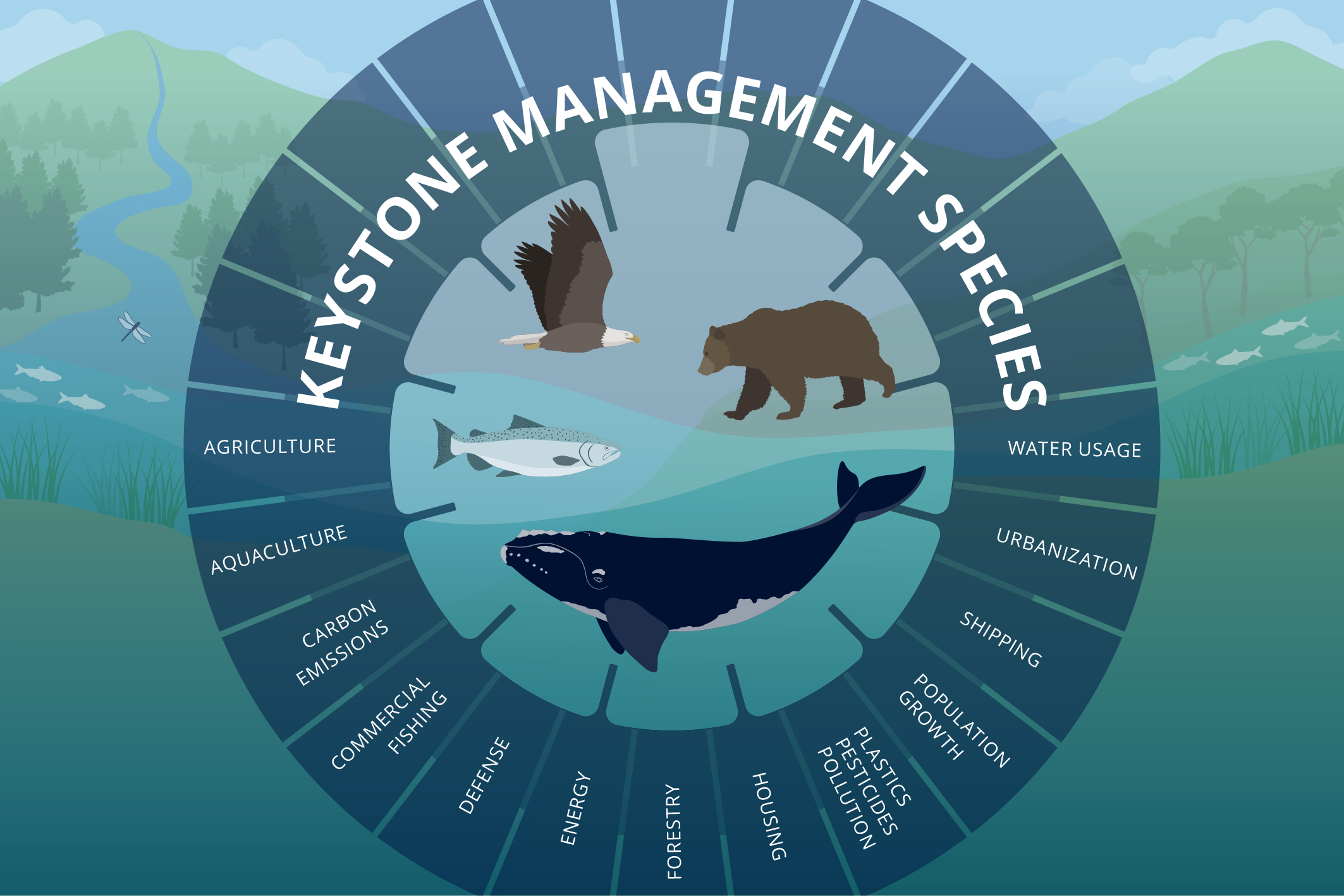
KEYSTONE MANAGEMENT SPECIES
Protecting charismatic species benefits their habitats and the broader ecosystem, thereby promoting ecosystem-based management.
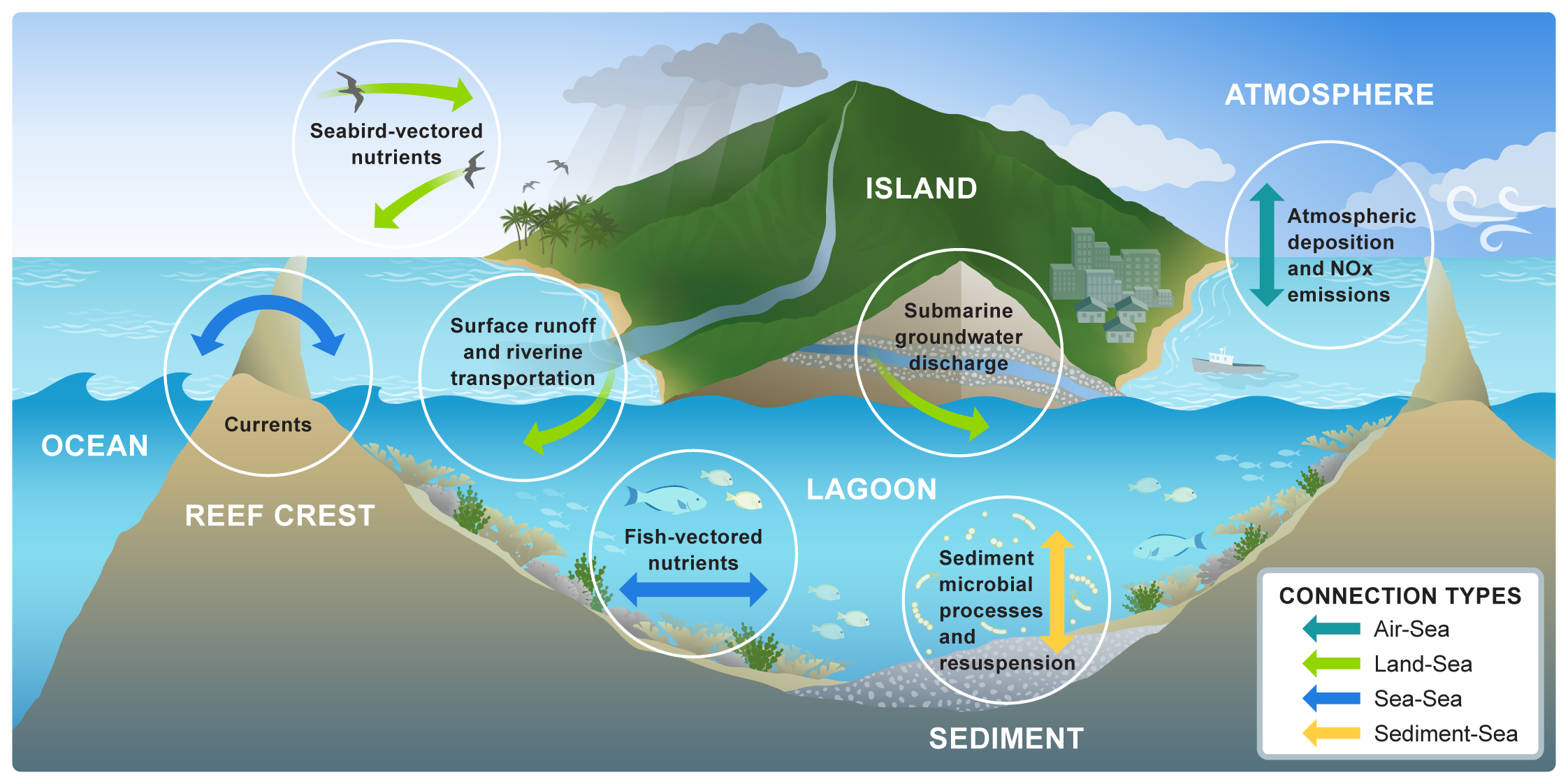
NUTRIENTSCAPE ECOLOGY
Coastal ecosystems are fundamentally shaped by the way nutrients connect across land and sea (for full figure see link below).
ARCTIC ECOSYSTEM STRESSORS
Integrating multiple, interacting stressors into ecosystem-based management and planning could provide an opportunity to manage Arctic resources amid a growing climate crisis.
THE SALAS Y GÓMEZ AND NAZCA RIDGES
These two volcanic seamount chains have unique biodiversity and exceptional natural and cultural significance.
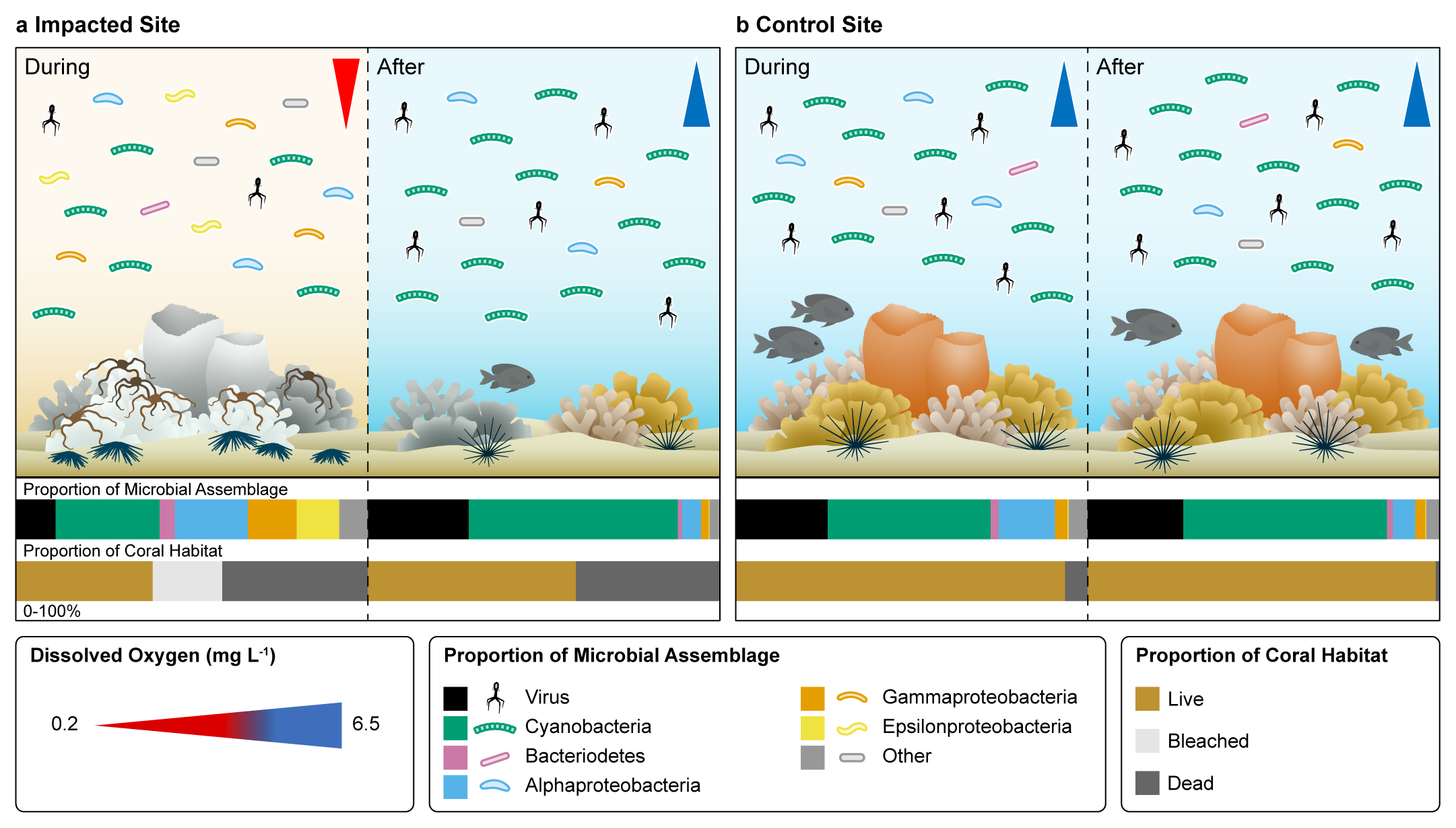
DEOXYGENATION IMPACTS ON A CORAL REEF ECOSYSTEM
Deoxygenation events affect coral reef microbial and benthic communities, with persistent changes in benthic structure.
A HIDDEN WORLD BELOW THE SURFACE
Ocean features called surface slicks serve as hidden nurseries for marine life, playing a critical role in sustaining fish populations and healthy ecosystems.
DEEP-SEA MINING THREATENS MIDWATER ECOSYSTEMS
Sediment plumes and noise generated by deep-sea mining could impact pelagic species and biodiversity in deep midwater ecosystems (for full figure see link below).
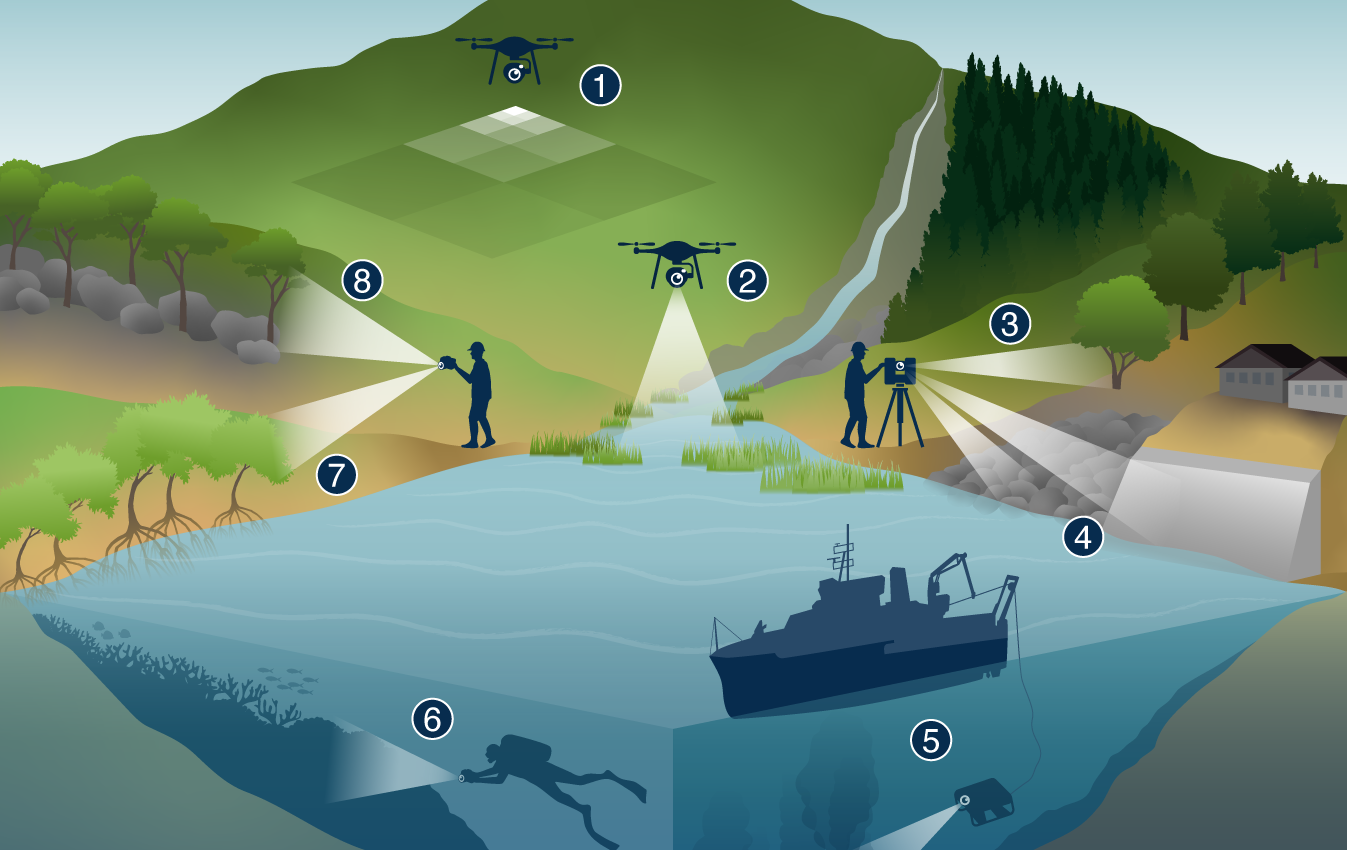
3D ECOSYSTEM MAPPING
Advances in 3D digital mapping technologies allow scientists to study ecosystem structure and dynamics across diverse habitats (for full figure see link below).
MICROPLASTICS INVADE LARVAL FISH HABITAT
Surface slicks form where ocean currents converge, creating a vital habitat for larval fish, but also accumulating tiny, toxic microplastics.
CORAL REEF FUTURES
Human activities are causing unprecedented changes to coral reefs that evolved over millions of years.
IMPACTS TO CORAL REEFS
Coral reef ecosystems have changed significantly as human stressors have increased through time.
CORAL REEF MANAGEMENT TIMELINE
This visualization depicts the history of key events affecting coral reef fisheries management in Hawaiʻi.
ISLAND MASS EFFECT
This infographic explains the complexity of biological interactions and ocean dynamics around coral reefs in remote ocean areas.
“Creative graphics that capture and enhance the detail of the science in question. It’s a pleasure to work with someone who understands the science and is therefore able to communicate it effectively to a range of audiences with an added layer of artistic flair.”
— Gareth Williams, PhD, Professor in Marine Biology, School of Ocean Sciences, Bangor University